
- New
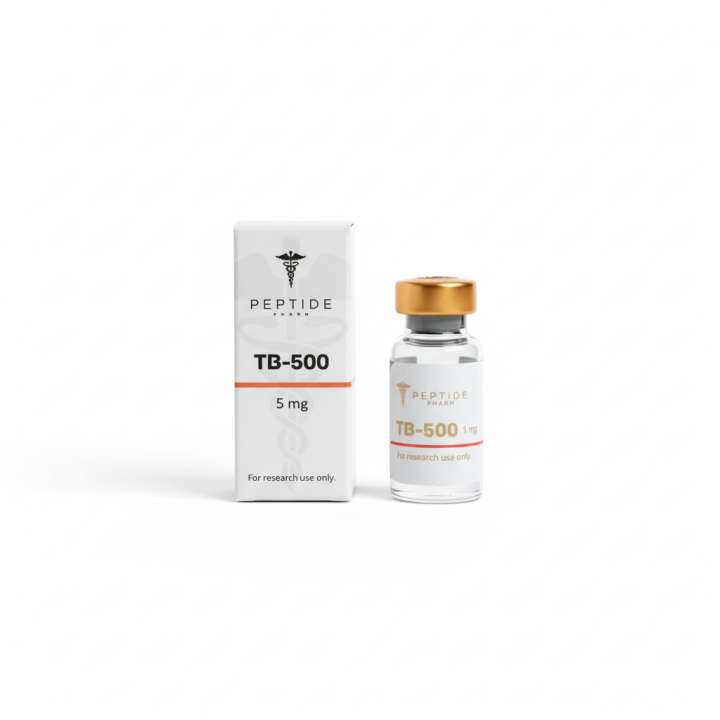
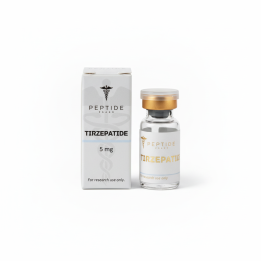
TB-500 5mg PEPTIDE PHARM images
TB-500 (Thymosin Beta-4) – Overview, Mechanism, and Potential Applications
TB-500, commonly referred to as TB-500, is a peptide related to Thymosin Beta‑4, a molecule naturally found in most human and animal cells. Its primary biological role involves supporting tissue regeneration, cell growth, and the movement and proliferation of cells. The peptide family known as thymosins was first studied in the 1960s when researchers isolated them from the thymus gland while investigating compounds involved in immune regulation and tissue repair.
Biological Functions of TB-500
TB-500 is widely recognized for several biological activities associated with tissue repair and recovery:
1. Accelerated Tissue Healing
The peptide is believed to assist in repairing damaged tissues by promoting faster wound healing. Research suggests potential benefits for recovery in skin, muscle, cardiac tissue, eyes, and other organs.
2. Anti-Inflammatory Effects
TB-500 may help reduce inflammation, an important factor in injury recovery and tissue repair processes.
3. Improved Cellular Mobility and Flexibility
Through its influence on cellular structures, the peptide may enhance cell movement and flexibility, which are essential for regeneration and healing.
Mechanism of Action
The activity of TB-500 is closely related to its interaction with Actin, a structural protein that forms part of the cytoskeleton in eukaryotic cells. Actin is crucial for maintaining cell shape, enabling cell migration, and supporting cell division.
By increasing actin activity and polymerization, TB-500 may facilitate processes such as:
cell migration
tissue regeneration
cellular growth and repair
This mechanism is considered important in recovery from injuries and damage to tissues.
Although promising results have been observed in laboratory and animal studies—particularly in models involving wound healing and heart tissue damage—there is still a lack of large, well-controlled clinical trials in humans. Much of the current understanding comes from preclinical research and cell-based experiments.
Interest in Athletic Recovery
In sports and athletic communities, TB-500 has drawn attention due to claims that it may:
speed up recovery from injuries
reduce inflammation
improve flexibility and mobility
However, such uses remain experimental and are not supported by strong clinical evidence. Because of its potential to accelerate recovery and potentially provide a performance advantage, the World Anti-Doping Agency has prohibited its use in professional sports.
Dosage Calculations (Example)
When reconstituting a 5 mg vial of TB-500 with 2 mL of bacteriostatic water, the concentration can be calculated as follows:
5 mg equals 5000 mcg
5000 mcg divided by 2 mL results in a concentration of 2500 mcg per mL
Using a 0.5 mL insulin syringe (50 units):
0.01 mL equals 1 unit
Example: Twice-Weekly Protocol
A common experimental dosage range is 200–500 mcg per injection.
For a 500 mcg dose:
500 mcg ÷ 2500 mcg/mL = 0.2 mL
0.2 mL corresponds to 20 units on a 50-unit insulin syringe.
Example: Daily Protocol
Some experimental protocols mention 2 mg (2000 mcg) per day.
For a 2000 mcg dose:
2000 mcg ÷ 2500 mcg/mL = 0.8 mL
0.8 mL corresponds to 80 units.
Approximate Number of Doses per Vial
Twice-weekly protocol: about 10 injections of 500 mcg per vial
Daily 2 mg protocol: roughly 2–3 doses per vial
Example 4-Week Cycle
Twice weekly: 8 total injections → approximately one vial required
Daily dosing: 28 injections → roughly 12 vials needed
Because dosing protocols vary widely and no standardized medical guidelines exist, any potential use should only be considered under medical supervision.
Potential Risks
As with many experimental peptides, the safety profile of TB-500 has not been fully established, especially in humans.
Short-Term Risks
Possible immediate effects may include:
irritation, redness, or swelling at the injection site
allergic reactions
headaches or nausea
dizziness
feelings of restlessness or increased energy reported anecdotally.
Long-Term Risks
The long-term safety of TB-500 remains unclear. Potential concerns include:
Possible cancer risk: due to its role in stimulating cell growth and migration
Abnormal tissue growth: long-term stimulation of regeneration pathways may disrupt normal tissue regulation
Hormonal changes: prolonged use could potentially influence endocrine balance
Immune system effects: as a peptide linked to immune signaling, its chronic impact on immunity is not well understood.
Summary
TB-500 is a peptide derived from thymosin beta-4 that has demonstrated promising regenerative and anti-inflammatory properties in early research. Its potential roles in tissue healing, injury recovery, and cellular repair have made it an area of interest in both medical research and athletic communities.
However, despite encouraging results in laboratory and animal studies, robust human clinical trials are still lacking. As a result, its safety, effectiveness, and appropriate medical applications remain uncertain. Any experimental use should therefore be approached cautiously and ideally under professional medical guidance.

 Secure Bitcoin Payments
 Free Shipping
 Discreet Packaging
Comments (0)
Your review appreciation cannot be sent
Report comment
Report sent
Your report cannot be sent